

 Arame Live in Concert in Rancho Mirage, CA. April 18, 2026 at 6:30 PM. Call: (323) 580-0808
  Ethno Colors in Glendale, CA. September 26 and October 11, 2026, at 7 PM. Call: (818) 244-2468
 1 Million Habitable Planets Could (Theoretically) Orbit a Black Hole. Here's How
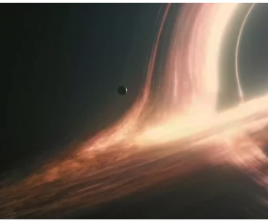
A black hole could have 1 million planets orbiting near it that are potentially capable of supporting life as we know it, an astrophysicist suggests.
Since there is life virtually everywhere liquid water exists on Earth, astronomers often judge a world as potentially habitable if it orbits within a zone where liquid water could survive on its surface. Our sun's "habitable zone" hosts just one planet (Earth), but the story could be different for other stars. For example, the TRAPPIST-1 system has three Earth-size planets within its habitable zone.
Sean Raymond, an astrophysicist at the Observatory of Bordeaux in France, researches how planetary systems form and evolve. As part of a column Raymond writes called "Building the Ultimate Solar System," he set out to see how many planets could orbit a black hole.
"I think we can learn from the extremes ... they are basically the boundaries of the box in which we are searching," Raymond told Space.com. "This system is one extreme — the most packed imaginable. It's a fun blend of imagination and science."
There are currently two kinds of black holes that scientists know best, Raymond said. Stellar-mass black holes are equal in mass to a few suns, and form when giant stars die and collapse in on themselves. Supermassive black holes are millions to billions of times the mass of the sun, and are thought to exist in the hearts of most, if not all, large galaxies. (A third class, intermediate-mass black holes, is poorly understood.)
Black holes are extremely compact. A black hole with the mass of the sunwould be about only 3.7 miles (6 kilometers) wide. In comparison, Sagittarius A*, the supermassive black hole thought to lurk at the heart of the Milky Way, has a mass of about 4 million suns and a diameter of about 14.7 million miles (23.6 million km), or a little more than 40 percent the size of Mercury's orbit around the sun.
What if the sun had a black hole companion?
A common question in physics classes is to imagine what would change if the sun were replaced with a black hole of the same mass, Raymond said. The answer is that nothing would change regarding the planets' orbits — if the black hole had the same mass as the sun, the orbits would remain the same. (Life on Earth would obviously suffer from the lack of light and heat in such a scenario, Raymond added.)
If the sun had an equal-mass black hole companion orbiting near it — at, say, one-tenth of an astronomical unit (AU) — the orbits of the solar system's planets would not change much, Raymond noted. (One AU is the Earth-sun distance — about 93 million miles, or 150 million km.)
Still, assuming these planets kept the same distance from the sun as they do now, the gravitational pull of the sun and its black hole partner would lead these worlds to complete their orbits a bit more quickly, with Earth's year decreasing from 365 days to 258 days, he said.
In the above scenario, the sun and the black hole would complete an orbit with one another every 2.9 days. This means the amount of energy that Earth would receive from the sun would fluctuate between 90 percent and 110 percent of its average as the sun moved farther from or closer to Earth.
What if a supermassive black hole had a ring of planets?
In addition to imagining life around a stellar-mass black hole, Raymond also calculated how many potentially habitable planets might fit around a supermassive black hole 1 million times the mass of the sun. "That's almost as massive as the one in the center of the Milky Way," he said. It would only be about the diameter of the sun, he added.
Around the sun, the orbits that planets travel can come only so close together before the effects of their gravitational pulls overwhelm those of the sun, leading to unstable orbits. Raymond noted that about six Earth-mass planets can fit in stable concentric orbits within the sun's habitable zone.
In contrast, a supermassive black hole's gravitational pull is extraordinarily strong, enough to easily overwhelm those of planets. If the sun were replaced with a million-solar-mass black hole, 550 Earth-mass planets could fit in stable concentric orbits in the habitable zone, Raymond calculated.
The supermassive black hole's gravity would pull more strongly on the side of each planet closer to the black hole. This would stretch the habitable-zone planets out, although they would not be close enough to get ripped apart, Raymond said.
One way to create a habitable zone around this supermassive black hole is to place stars between it and the planets. A ring of nine sun-like stars 0.5 AU from a million-sun black hole would make each of the 550 Earth-mass planets in the above scenario potentially habitable, Raymond said.
"It would be pretty interesting to live on a planet in this system," Raymond noted. "It would take just a few days to complete an orbit around the black hole — about 1.6 days at the inner edge of the habitable zone and 4.6 days at the outer edge." [10 Exoplanets That Could Host Alien Life]
At the closest approach, or conjunction, between two such planets, the distance between these worlds would be "about twice the Earth-moon distance," Raymond noted. "At conjunction, each planet's closest neighbor appears about twice the size of the full moon in the sky."
In addition, the next-nearest neighbors would be only twice as far away, and so would appear as big as the full moon during conjunction, Raymond said. Four more planets would be at least half the size of the full moon during conjunction, he added. "Conjunctions happen a little less than once per orbit, so every few days there is a gaggle of giant objects passing across the sky," he said.
The nine suns "would also be a sight to behold," Raymond said. Each would complete its orbit around the black hole every 3 hours.
"That means that every 20 minutes, one of the suns would pass behind the black hole," Raymond said. "When a sun passes behind the black hole, the black hole's gravity bends its light and can act like a lens. It focuses the sun's light toward the planet. This distorts the shape of the sun into a ring ... a pretty sweet light show."
Furthermore, starlight would be stretched by the black hole's gravity. "Stars closer to the black hole would appear redder, and those farther from the black hole would appear bluer," Raymond said.
Source: https://www.livescience.com/62786-black-hole-million-habitable-planets.html